Wedding guest
Wedding guest dresses UK: what to wear, whatever the invitation says
The average British guest now attends two or three weddings a season, each with its own venue, weather and unspoken rules. Here’s how to decode the invitation, choose a dress you’ll wear again, and stop panic-buying the week before.
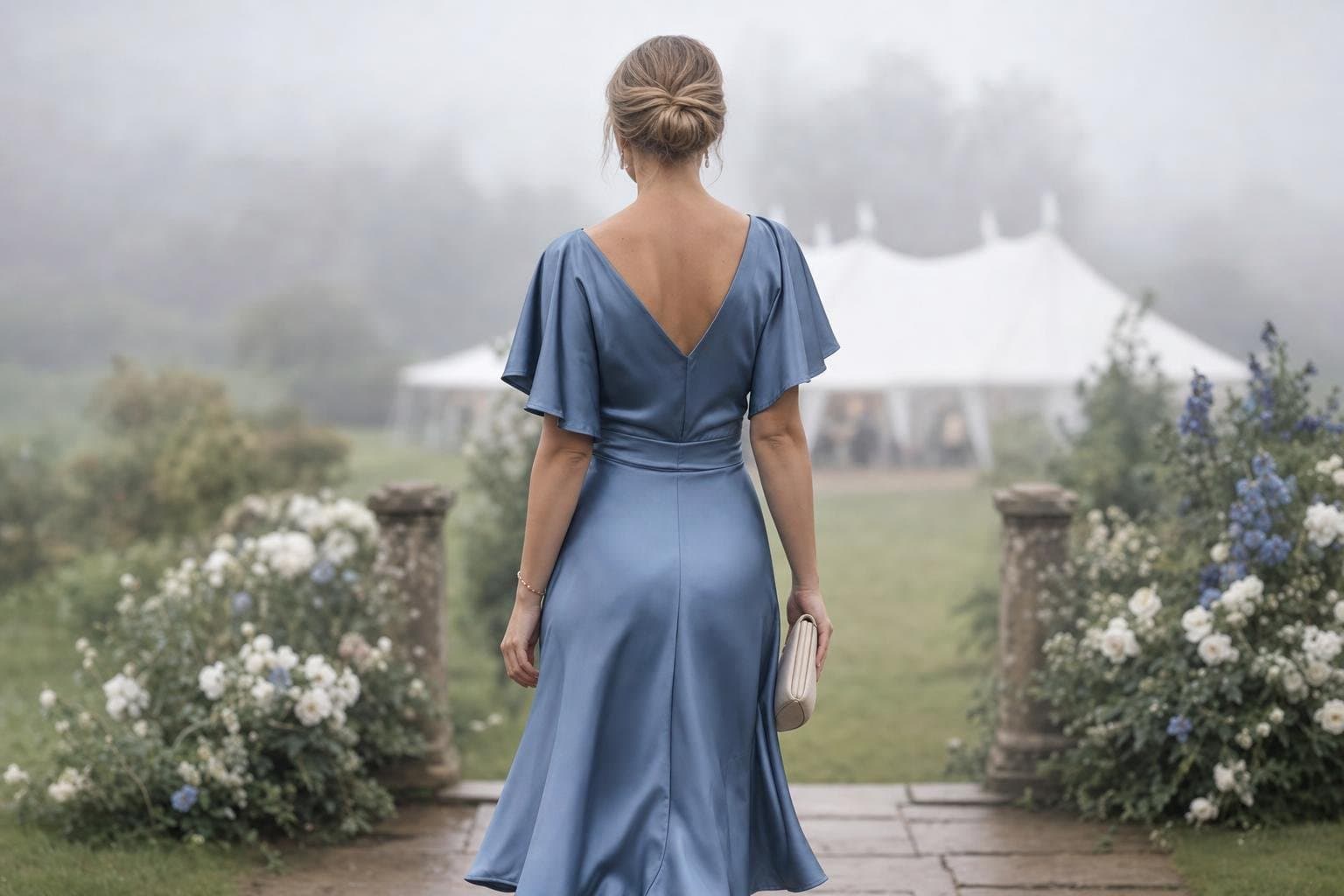
Decode the dress code first
Most UK invitations say nothing, which means smart daywear: a midi dress, elevated separates, or a jumpsuit, with the formality dialled up or down by fabric and accessories. “Formal” or “black tie optional” pushes you to floor or midi length in a richer fabric — satin, crepe, heavier chiffon. “Festival”, “garden” or “relaxed” invites colour, print and flat-shoe-friendly lengths. If the ceremony is religious, check whether shoulders or knees need covering for that part of the day — a tailored blazer or a wrap solves it without changing the outfit.
The colour rules that actually still apply
Only two are near-universal: don’t wear white, ivory or anything photographing as white, and don’t out-dress the couple. Black is now fine at most British weddings (safer for an evening do; soften it with colour in the accessories if the ceremony is at noon). Beyond that, choose what suits you: cool complexions sing in dusty blue, emerald and berry; warm colouring in rust, coral and olive. A print with movement photographs beautifully at outdoor weddings and hides creases on long journeys — useful, because most of us arrive by train or after two hours on the M25.
Length and silhouette, by venue
The midi is the workhorse of British wedding-guest dressing for a reason: it suits church pews, marquee lawns and dance floors equally, and it flatters at almost every height (see our long dresses guide for what midi and maxi labels really mean). Full-length gowns belong at black-tie and city-hotel weddings. Wrap and A-line shapes forgive a wedding breakfast better than bodycon; if you’re choosing between silhouettes, our body-shape guide is the tie-breaker. And check the heel-to-grass ratio: stilettos and lawns are natural enemies — block heels or dressy flats save the day at garden and barn venues.
Fabric by season
- Spring: crepe and heavier chiffon with sleeves or a matching cover-up — April ceremonies are colder than they look in photos.
- Summer: linen blends, floaty viscose and satin-back crepe; anything unlined will be tested by strong sunlight, so check opacity before the day.
- Autumn: midi lengths in jewel tones, long sleeves, and a proper coat you’re not embarrassed by in the photos — the cloakroom queue is part of the outfit.
- Winter: velvet, heavier satin and knitted layers; deep colours photograph richly in low light.
One dress, three weddings
The savviest guests buy one excellent dress per season and restyle it: different shoes, jewellery, hair, cover-up. Choose a colour that isn’t instantly memorable in photos (prints are harder to repeat than plains), natural-feel fabrics that steam back to life in a hotel bathroom, and a shape that works with both heels and flats. Budget the alterations into the price — £15–£25 at a tailor turns “nearly” into “made for me”, and a plain hem is far cheaper to adjust than a tiered or bordered one.
The search problem
“Wedding guest dress” returns thousands of results at every UK retailer, and the filters can’t express what you actually mean: midi, sleeves, cool tones, under £120, nothing that clashes with a sage-green bridesmaid party. You end up opening forty tabs and buying two sizes of three dresses to try. That requirement — stated once, in plain words — is exactly what Fairlux is built to answer: a shortlist that qualifies, from hundreds of UK stores, ranked for you. Join the waitlist and retire the forty tabs before next wedding season.